In short:
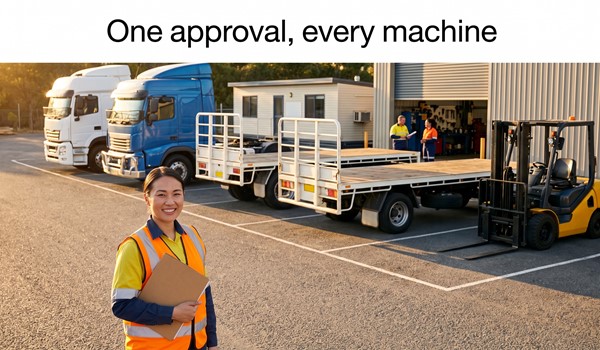
A master facility or asset line gives you an approved limit you draw against for each purchase, instead of reapplying every time.
How to finance multiple pieces of equipment in one application
- One assessment, many assets: A master facility or asset line gives you an approved limit you draw against for each purchase, instead of reapplying every time.
- Consistent terms: The same rates and conditions apply across every asset drawn under the facility, rather than varying deal by deal.
- Faster each time: Once the limit is set, a new asset typically needs only its invoice and details, not a full application.
- Less admin and fewer fees: One set of documents replaces several, cutting establishment costs and paperwork across a buying program.
- The decision: If you are buying several assets now or across the year, set up a facility rather than financing each purchase separately.
Buying one machine is a single finance application. Buying five over a year does not have to mean five applications, five assessments, and five sets of documents. Lenders offer facilities built exactly for this, and using one changes both the speed and cost of a buying program. This guide covers how to fund multiple assets under a single approval. It is general information, not financial advice.
The problem with financing one at a time
Financing each asset as a standalone deal means repeating the same work. Every purchase triggers a fresh assessment of your business, another round of financials and bank statements, another set of contracts, and often another establishment fee. Each application also takes time you may not have when a supplier has stock ready or a good used machine appears.
The bigger issue is inconsistency. Deals approved months apart land on different rates and terms, because your financials, lender appetite, and market conditions all shift. You end up managing a patchwork of facilities with staggered expiry dates, which makes forecasting harder than it needs to be.
How a single-application facility works
The structures go by several names, but the principle is the same: get assessed once, then draw against an approved limit as you buy.
Master facility agreement
A master facility agreement is an overarching arrangement setting up a pre-approved limit for multiple purchases under one agreement. The full credit assessment happens once. After that, each new asset is added under the same framework, and you typically supply basic details about the machine rather than a complete application. The same terms and conditions apply across every asset drawn, which keeps your finance consistent as the program runs.
Revolving or asset line
A revolving limit works similarly but restores as you repay. You hold an approved limit across a set term, acquire assets without reapplying, and redraw funds as repayments are made. This suits a continuous replacement cycle rather than a one-off expansion. Bulk limits are a variation with a shorter window, often six months, and once drawn are not reusable.
| Consideration | Financing each asset separately | One facility or application |
|---|---|---|
| Credit assessment | Repeated every purchase | Completed once |
| Terms and rates | Vary deal by deal | Consistent across assets |
| Time per purchase | Full application each time | Invoice and asset details |
| Documentation | A new set every deal | One framework |
| Best suited to | A single one-off purchase | Fleet growth or ongoing buying |
When it is worth setting up
A facility earns its place when buying is ongoing rather than exceptional. Consider it if you are:
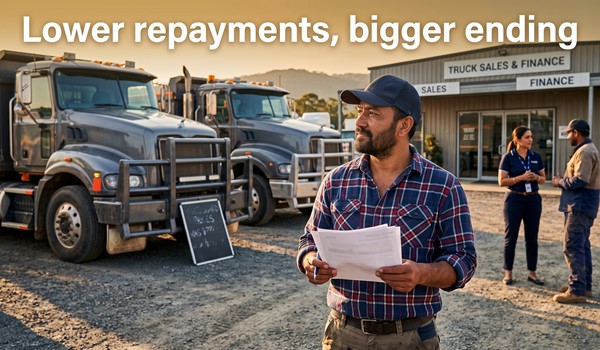
- Expanding a fleet: Transport, civil, and earthmoving businesses adding trucks, trailers, or plant across a season.
- Running a replacement cycle: Operations that retire and replace machines on a predictable schedule.
- Fitting out a site: Several pieces of equipment needed together for a new location or production line.
- Buying opportunistically: Businesses that move on good used machines when they appear and cannot wait on a fresh approval.
For a single machine you will not buy again for years, a standalone chattel mortgage is simpler. The facility structures pay off when the second and third purchases are already on the horizon.
Structuring it well
Two details matter more than the headline limit. First, assets have different working lives, so a facility should allow terms and balloons matched to each machine rather than forcing everything onto one schedule. A truck and a piece of production plant depreciate on different curves, and the repayments should reflect that.
Second, the structure needs to suit your tax position. Most equipment sits under a chattel mortgage, where you own each asset from day one and a GST-registered business can generally claim depreciation and the interest portion of repayments, plus the GST as an input tax credit. Across several assets that compounds, so confirm it with your accountant before the facility is set.
This is where a broker matters. EasyAsset compares more than 50 bank and non-bank lenders in one application, and lender appetite for multi-asset facilities varies widely. Sizing the limit correctly, matching terms to each asset class, and finding the financier comfortable with your mix is specialist work, and the quote stage carries no impact to your credit score.
A realistic scenario
Consider a freight operator planning to add two prime movers and three trailers over about six months. Financed individually, that is five applications, five assessments, five sets of documents, and five chances for terms to drift as the year goes on.
Instead, the operator sets up a master facility sized to the whole program. The credit assessment happens once. As each truck and trailer is sourced, it is drawn under the same agreement on consistent terms, with the invoice and serial number supplied rather than a full application. Each asset settles in days rather than weeks. The saving is not only fees and admin time, it is the ability to buy on the market's timing rather than the lender's.
What matters most
If your business buys equipment more than occasionally, financing one asset at a time costs you time, fees, and consistency. A master facility or asset line puts the credit assessment behind you once, sets consistent terms across every purchase, and reduces each new machine to an invoice and a few details. Size the limit to your buying plan, match terms to each asset's working life, and confirm the tax treatment with your accountant. Do that and you buy on your timing rather than the lender's. This is general information only and not financial advice.
Planning several equipment purchases this year? Talk to EasyAsset about a multi-asset facility here.
Frequently asked questions
Do I still provide documents for each asset?
Usually only basic details about the machine, such as the supplier invoice and the serial number or VIN, rather than a full finance application. The main credit assessment happens once when the facility is established, which is what makes each subsequent purchase fast.
Can different types of equipment sit under one facility?
Generally yes. Trucks, trailers, and machinery can commonly be drawn under the same agreement, though each asset should carry a term and balloon matched to its own working life. Lender appetite for mixed asset classes varies, which is why comparing across a panel helps.
Is a facility worth it for two purchases?
It depends on timing. Two machines bought together are often best handled as a single application with one settlement. A standing facility makes more sense when purchases are spread across months and you want the approval already in place when the right asset appears.