In short:
The body or fit-out can represent a large share of the total spend, and it is built by a different supplier on a different timeline.
Key facts
- A cab-chassis is only half a vehicle: The body or fit-out can represent a large share of the total spend, and it is built by a different supplier on a different timeline.
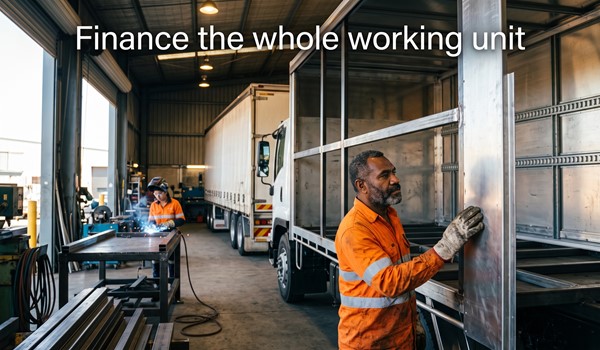
- Finance the whole working unit: Cab-chassis and body can usually be funded under one facility so you have one repayment rather than a vehicle loan plus a separate debt for the body.
- Trailers stand alone: A trailer is regularly financed independently of the prime mover, and you do not need to refinance the truck to do it.
- Compliance affects funding: Modifications need certification under the national code, and lenders want the vehicle registered and roadworthy at settlement.
- Split assets, split depreciation: On refrigerated units the reefer is typically a separate depreciable asset from the trailer, which your accountant should structure from day one.
Buying the truck is the straightforward part. The complication starts when the vehicle that earns your money is two or three purchases wearing one registration: a cab-chassis from a dealer, a body from a specialist builder, and sometimes a crane, tipper hoist or refrigeration unit from a third supplier. Each has its own lead time, invoice and payment expectations. Financing that as a single working asset rather than a series of separate problems keeps the project on schedule and the cash flow intact.
Why bodies and trailers need their own approach
Road freight carried approximately 253 billion tonne kilometres in 2024-25, part of a national freight task at its highest recorded level according to the Bureau of Infrastructure and Transport Research Economics. Very little of that is carried by vehicles straight off a dealer floor. Tippers, curtain-siders, tankers, car carriers and refrigerated units are specified for a task, and the specification is where the cost and the finance complexity live.
The practical problem is sequencing. A body builder may want progress payments across a build running weeks or months after the chassis is delivered. If you have financed only the chassis under truck finance, you are funding the body from working capital at exactly the moment the vehicle earns nothing. Structuring both into one facility from the start avoids that.
The compliance layer lenders care about
Bodies and modifications sit inside a regulated framework, and lenders will not settle around unresolved compliance. Under the National Heavy Vehicle Regulator, a modification is any addition or removal of a component, or any change from the manufacturer's specification. Common modifications must be certified in line with Vehicle Standards Bulletin 6, with an Approved Vehicle Examiner issuing a certificate and attaching a modification plate once the vehicle passes inspection.
One exception is worth knowing. Work completed under the federal second-stage-of-manufacture scheme, which is how many new chassis are bodied before first supply, is not a modification under heavy vehicle law. That changes the paperwork trail, so confirm it with your body builder early: it affects what your lender needs before releasing funds.
Structuring the purchase
| Situation | Typical approach | Why it works |
|---|---|---|
| New chassis plus new body | One facility covering both | Single settlement, one repayment, funds released on completion |
| Body onto a truck you own | Standalone asset facility | No need to refinance the existing vehicle |
| Trailer only | Chattel mortgage on the trailer | Trailer is its own security, prime mover untouched |
| B-double or road train | Combination facility | Both trailers, one application, often better than two loans |
| Refrigerated setup | Trailer and reefer funded together | Separate depreciation treatment, single repayment |
Spec builds are routine. New trailers are commonly ordered for particular decking, tie-down configurations, refrigeration units or curtain types, and finance can be arranged on a spec-build basis with funds released on completion, so you are not carrying the manufacturer's progress claims yourself.
What changes between new and used
Trailers behave differently to trucks here, and the difference works in your favour:
- Structures last longer than drivetrains: A well-maintained 10 to 15 year old curtain-sider or flat top is often structurally sound and very financeable, where a truck of the same age would be marginal.
- Age caps vary by type: General trailers are typically financed up to 15 to 20 years old at end of term. Refrigerated trailers attract tighter caps because the reefer unit ages faster than the box.
- Inspection and registration affect settlement: A structural inspection guards against hidden corrosion and strengthens your application. Lenders also require the trailer registered and roadworthy on the day, so budget for registration and repairs before your settlement date.
A realistic scenario
Picture an operator winning a cold chain contract requiring a refrigerated semi. The trailer and reefer unit come to around $120,000 new, and the existing prime mover is owned outright and running well.
A five year finance lease at an indicative 7.9% lands near $2,450 a month, with the trailer and refrigeration unit funded together under one facility and the prime mover left untouched. The lease payments are deductible and the operator retains the option to upgrade refrigeration technology at term end rather than owning a dated unit. The detail that pays off later is handled at the start: the accountant treats the reefer as a separate depreciable asset from the trailer body, each with its own effective life, so depreciation is optimised across both from day one instead of being unpicked years later. If the contract also demands a second unit within twelve months, a trailer finance fleet facility can bundle replacements as they come due rather than accumulating separate loan accounts.
What matters most
Finance the unit that does the work, not just the part with the number plate. Bring the body builder or trailer manufacturer into the finance conversation early so progress payments and completion timing sit inside the facility rather than being absorbed by working capital. Confirm the compliance pathway with your builder, because certification affects settlement. Ask your accountant to split depreciation across separate assets such as refrigeration units from the outset. And recognise that specialist trailer categories need specialist funders. EasyAsset works with transport lenders who understand trailer valuations, spec builds and the difference between general and specialist categories, comparing more than 50 lenders in one application and managing the structure through to settlement.
This article is general information only and does not take your circumstances into account. It is not financial or tax advice, and you should speak with your accountant about your own position.
Specifying a body or trailer build and want the finance sorted first? Get a trailer finance quote here.
Frequently asked questions
Can I finance a trailer separately from my prime mover?
Yes, and it is very common. Many operators already own their truck and need only a new or replacement trailer. The trailer is the security for the loan in most structures, so refinancing the prime mover is not required.
Do specialist trailers need a different lender?
Often. Refrigerated trailers, tankers, car carriers, livestock floats and low loaders are assessed individually and need funders who understand the asset class and its resale market. General equipment lenders frequently price these poorly or decline them outright.