In short:
A lender needs to see that you can do the work, and that the work supports the truck.
Key facts
- The test is two-sided: A lender needs to see that you can do the work, and that the work supports the truck.
- Evidence beats trading history: Proof of work, documented experience and a realistic running-cost budget carry weight when tax returns do not exist yet.
- Deposits vary: Some applicants are approved without one, but new operators are exactly the group a lender may ask for a contribution.
- GST is about turnover, not the truck: Registration is compulsory at $75,000 GST turnover, optional below, and required for fuel tax credits.
- Pre-approval is not final approval: It is usually conditional on the specific vehicle passing inspection and valuation.
The first truck is the hardest to fund, and rarely for the reason people expect. Lenders do not dislike new businesses: owner-operators are the standard borrower here, with road freight spanning roughly 64,700 businesses averaging about 2.5 employees each, per IBISWorld. The difficulty is evidentiary. Without trading history you must show in other ways what financials would.
What the lender is actually deciding
Every first-truck application is two questions, and a strong answer to one will not rescue a weak answer to the other:
- Can you do the work? Licence class, years of relevant driving, the sector you know, and whether the truck you have chosen suits the work.
- Can the work support the truck? Expected revenue, what it costs to earn, your existing commitments, and what happens if a contract starts late.
Most applicants over-invest in the first and under-prepare the second. A signed contract will not save an application if the numbers behind it do not cover the repayment plus running costs.
Evidence that strengthens a new-operator application
Where financials are thin, lenders may consider:
- Available bank statements: Even a few months of trading shows real deposits, and personal or prior contracting records add context where the entity is new.
- Proof of work: Signed contracts or written client engagement strengthen an application, but do not guarantee approval, because the lender still tests whether the work services the debt.
- Industry experience and documents: Employment history in the same sector genuinely helps when the business is new, so have references and dates ready. An accountant's declaration or BAS can substitute for full financials under a low-doc pathway.
- Credit history and a costed budget: Clean credit opens more lenders, and a scatter of recent enquiries works against you. Costing fuel, tyres, servicing and downtime answers the second question.
The truck gets assessed too
You are not the only thing underwritten. The vehicle is the primary security, so its condition and value shape the offer:
- Age at the end of the term: Some lenders apply a maximum vehicle age at term end rather than at purchase. Policies vary, and the effect is a shorter term on an older truck, raising the repayment.
- Valuation and inspection: Private sales often trigger an inspection. If the truck values below the purchase price or fails inspection, the approved amount can change even after pre-approval.
- Deposit, security and guarantees: No-deposit finance may be available, but a lender can require a contribution based on your history, credit profile and the truck. The truck is usually the primary security, and whether a personal guarantee is also required depends on the lender and structure.
The costs that sit outside the repayment
Budget the week, not the repayment. Beyond the loan sit registration, insurance, fuel, tyres, servicing, tolls and the weeks the truck is off the road. Ask whether establishment and brokerage fees sit inside the quoted figure.
A balloon lowers the monthly payment by deferring principal to term end, which helps early cash flow. The risk is setting it so high that the residual exceeds the truck's value when it falls due, leaving you refinancing a shortfall. Set against a realistic end-of-term value it is sensible. Set to make an unaffordable truck look affordable, it only defers the problem.
This is why pre-approval is a budget, not a guarantee. An indicative figure is not a formal approval, and even formal pre-approval is usually conditional on the specific vehicle. Get pre-approved before you shop, but do not treat it as settled funds until the lender has seen the truck.
A realistic scenario
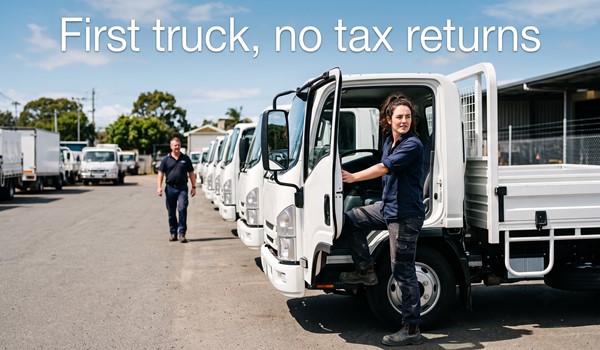
Consider a driver with eight years of experience going out on their own, with local courier work lined up. The ABN is four months old, there are no tax returns, and the target vehicle is a three year old light rigid at around $65,000.
The application is assessed on four months of business statements, personal statements covering the period before, documented experience and written confirmation of committed work. For illustration only, $65,000 over five years at 7.9% with no balloon and no financed fees produces repayments of approximately $1,315 a month. Whether it is approved, and on what terms, depends on the lender. Because receivables lag hardest early, a modest working capital finance facility covers fuel, insurance and registration before the first invoices are paid.
Structures at a glance
| Structure | Title during the term | Commercial fit |
|---|---|---|
| Chattel mortgage | Yours, with a registered security interest | Owning and keeping the truck |
| Commercial hire purchase | Financier, until the final payment | Fixed payments, ownership at the end |
| Finance lease | Financier | Handing the truck back and upgrading |
Tax and GST outcomes depend on business use, registration status and the specific agreement, so treat structure as a commercial decision and confirm the tax position with your accountant. The ATO treats hire purchase as a stand-alone purchase, so GST credit timing is not unique to a chattel mortgage.
What matters most
Prepare both sides. Assemble the evidence that you can do the work, then show the work supports the truck once running costs are counted. Ask what a deposit might look like, treat pre-approval as conditional, and set any balloon against a realistic end-of-term value. Lender policies on age caps, deposits, guarantees and low-doc evidence vary widely, so which lenders see your file often decides the outcome. EasyAsset compares more than 50 lenders, including specialist commercial vehicle funders who assess owner-operators daily, and manages the application through to settlement.
This article is general information only and does not take your circumstances into account. It is not financial or tax advice. Speak with your accountant and confirm lender requirements before committing.
Want to know what you could borrow before you start looking? Get a truck finance quote here.
Frequently asked questions
Do I need to register for GST to buy a truck?
Registration is based on your business turnover, not the truck's price. The ATO requires registration at a GST turnover of $75,000 or more and makes it optional below that, though you must be registered to claim fuel tax credits. If you are registered and the truck is used for business, you may generally claim a credit for the business-use portion through your BAS, subject to holding a tax invoice.
Can I get finance with less than 12 months trading?
Yes, though not from every lender. Some specialist lenders consider new businesses with relevant industry experience, evidence of work, or a deposit. It often depends on which lenders see the application, so ask before assuming you will not qualify.