In short:
Equipment finance generally suits assets that can be separately invoiced and valued. Structural work and permanent installations may need fit-out finance or a combined facility.
Key facts
- The useful distinction: Equipment finance generally suits assets that can be separately invoiced and valued. Structural work and permanent installations may need fit-out finance or a combined facility.
- Speed is the point: When the room already exists, structure the finance around getting equipment working again, not around funding a construction project.
- Know the upfront costs: Freight, installation, removal and fees may or may not be financeable, so ask before you commit.
- Bundling helps administration: Related purchases may sit under one facility, though settlement timing and pricing still depend on the assets, suppliers and lender.
- Check the tax position: The announced $20,000 instant asset write-off applies to eligible assets costing less than $20,000, and the ATO confirms it is not yet law.
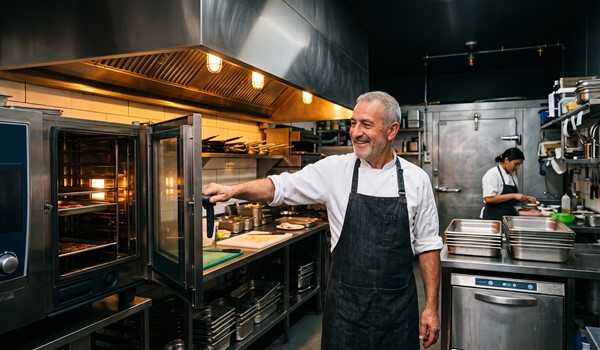
Not every kitchen spend is a fit-out. Sometimes the room is already built and the combi oven has died mid-service. Sometimes you are replacing a dishwasher costing more in service calls than repayments would. When the kitchen already exists, the finance should be structured around replacing the equipment quickly, not around funding a construction project.
When equipment finance is enough, and when it is not
The line is less clean than it sounds. A lender may fund the machine but exclude installation or permanent building work, while another includes the package under a broader facility. The practical test is whether the item can be separately invoiced, valued and, if needed, removed and resold.
Coolrooms show the distinction well. A freestanding or modular unit that can be removed generally behaves like equipment, while a permanently constructed coolroom tied into flooring, drainage and electrical works sits closer to a fit-out. The same applies to exhaust canopies, grease traps, gas lines, plumbed coffee equipment and anything hard-wired. Where a builder is issuing progress claims, hospitality fitout finance with staged drawdowns usually fits better, because interest is charged only on funds drawn.
What lenders assess
For a trading venue this is usually straightforward, but knowing the list helps you prepare: time in business, recent bank statements, turnover and repayment capacity, credit history, existing debts, remaining lease term, the equipment type, supplier and age, new or used, and any deposit. The equipment is commonly the primary financed asset, although guarantees or additional security may be required.
Between approval and the supplier being paid
This decides how fast your kitchen is working again, so ask about it explicitly:
- Approval is not settlement: Funds usually flow once documents are executed and the supplier has issued a final tax invoice.
- Direct payment: Many lenders pay the supplier directly. Confirm it, because it changes whether you need cash in the interim.
- Private purchases: Buying secondhand privately can require inspection or valuation and more documentation, adding time.
- Repayments starting: Ask whether the first repayment falls due after settlement, delivery or installation.
- One delayed item: A backordered fridge may hold up a bundled settlement unless the lender can make separate disbursements.
Also confirm what must be paid before the equipment runs: deposits, freight, installation, removal of the old unit, electrical or plumbing work, insurance, and establishment or brokerage fees. Some may be financeable and some not. Where you cover them yourself, a cash flow finance facility can bridge the gap without complicating the equipment loan.
Structures worth comparing
| Structure | Title during the term | Consideration |
|---|---|---|
| Chattel mortgage | Yours, with a registered security interest | Common where you want to own and retain the equipment |
| Commercial hire purchase | Financier, until the final payment | You use the asset and may be treated as owner for tax purposes |
| Finance lease | Financier | Can support planned replacement cycles, but residual and end-of-term obligations need to be understood |
| Equipment and fit-out bundle | Varies by facility | Where machines and build works are bought together |
A chattel mortgage is a common option where the business wants to own and retain the equipment, but the right structure depends on your cash flow, tax position and whether the transaction includes building work. Interest and depreciation may generally be deductible to the extent the equipment produces assessable income, and if the venue is GST-registered and the purchase is creditable it may generally claim the business-use portion of the GST credit through its BAS. Confirm it with your accountant.
The instant asset write-off, as it stands
Plenty of kitchen items sit near the threshold. The ATO confirms the Government announced in the 2026-27 Budget that it will permanently set the instant asset write-off at $20,000 from 1 July 2026 for small businesses with aggregated turnover under $10 million, and states plainly that the measure is not yet law.
Two details matter. The announced threshold applies to eligible assets costing less than $20,000, and it applies per asset, so several separately eligible items could each qualify. Under the announced measure, eligible businesses using simplified depreciation would generally add eligible assets costing $20,000 or more to the small business pool, subject to the applicable rules. Do not build a purchase decision around a deduction that has not passed.
A worked replacement scenario
A trading bistro needs three items totalling $72,000: a combi oven, a dishwasher on its third repair this year, and an undercounter fridge. No construction is involved. Before proceeding it confirms whether the lender can pay all three suppliers inside their timeframes, and whether freight, installation and removal can be included.
For illustration only, financing the full $72,000 at 7.9% with no deposit, balloon or financed fees gives monthly principal and interest repayments of about $1,456 over five years, or about $2,253 over three. Five years costs roughly $15,400 in total interest against roughly $9,100 over three. The venue weighs that against what it spends on repairs and lost trading when equipment fails mid-service. Approval and terms remain a matter for the lender.
What matters most
Match the instrument to the job. If you are buying machines that can be invoiced and valued separately, finance them as machines and take the speed that follows. If a builder is issuing progress claims, use a staged facility. Ask early who pays the supplier and when, what is financeable beyond the purchase price, and when repayments begin, because those answers decide how quickly the kitchen trades properly again. Confirm the tax treatment with your accountant rather than assuming a threshold applies. EasyAsset compares more than 50 lenders, including funders who understand commercial kitchen assets and hospitality cash flow.
This article is general information only and does not take your circumstances into account. It is not financial or tax advice. Speak with your accountant about your own position before committing.
Need equipment working again without draining trading cash? Request a hospitality finance quote here.
Frequently asked questions
Can I finance used commercial kitchen equipment?
Often, and it is common in hospitality given how much quality gear comes out of closing venues. Lenders assess age, condition and resale value, appetite varies, and private purchases may require inspection, so confirm before committing.
Should I repair or replace?
Compare what you spend on repairs, plus the trading lost when the unit fails during service, against the repayment on a replacement together with its warranty, service coverage and any energy or water savings. If repairs and downtime approach the repayment, replacement usually becomes cheaper.