In short:
A device does not earn because it is installed. Work out expected procedure volumes before you compare finance.
Key facts
- Demand decides it: A device does not earn because it is installed. Work out expected procedure volumes before you compare finance.
- Budget the running cost: Service contracts, consumables, software, insurance and power sit on top of the repayment every month.
- Term changes everything: Stretching a facility lowers the monthly commitment and raises total interest, so choose it against cash flow.
- GST is widely misunderstood: Medical services are generally GST-free rather than input taxed, and credits can still be claimed on purchases used to make GST-free sales.
- End-of-term matters: A balloon or lease residual is a real future obligation, so confirm what happens at term end.
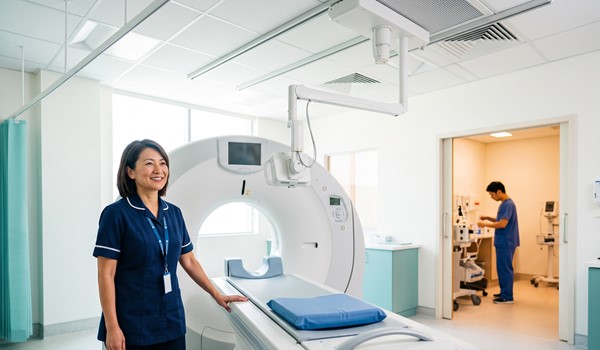
A major diagnostic purchase has to work as an operating investment before it works as a finance application. Practices usually approach it the other way around, settling on the device and then asking what the repayments would be. That order hides the question that decides whether the purchase succeeds: will the additional revenue comfortably cover the repayment and the cost of running the machine?
Start with demand, not the device
Australian diagnostic imaging is worth around $6.3 billion across roughly 2,900 businesses, per IBISWorld, and much of that capacity sits with independent practices rather than the large groups. The ones that make a single device work have done the arithmetic first.
Estimate how many procedures a month you can realistically expect, based on your current referral pattern and the studies you already send elsewhere rather than the supplier's projections. Then be conservative, because there is normally a lag between installation and first billing while accreditation, staffing and referrer awareness catch up.
The cost of running it, not just owning it
The repayment is rarely the largest recurring number. Build a monthly operating figure that includes:
- Service and maintenance contract: Often the single biggest running cost on imaging equipment.
- Staffing and reporting: Sonographer or radiographer time, plus specialist reporting fees where they apply.
- Consumables, software and licences: Per-study costs plus annual software or licence renewals.
- Insurance, power and cooling: Higher than general clinical equipment on larger modalities.
- Calibration, compliance and downtime: Periodic testing, accreditation obligations, and revenue lost when the device is unavailable.
A worked break-even example
Take $280,000 of imaging equipment and related commissioning. For illustration only, financing the full amount under a chattel mortgage over five years at 7.9%, with no deposit, balloon or financed fees, produces monthly principal and interest repayments of approximately $5,664. Assume operating costs of about $3,000 a month across service, consumables, software, insurance and power. That is roughly $8,664 a month to stand still. At a net $150 per procedure the device needs about 58 procedures a month, close to three per working day, before it contributes anything. If your referral estimate does not clear that comfortably, the answer is not a longer term.
| Illustrative structure | Monthly repayment | Payment at end | Key consideration |
|---|---|---|---|
| Five year, no balloon | About $5,664 | None | Highest monthly cost, lowest total interest |
| Seven year, no balloon | About $4,350 | None | Around $25,600 more total interest |
| Five year, $56,000 balloon | About $4,900 | $56,000 | Asset value must support the balloon |
| Finance lease | Depends on residual | Residual obligation | End-of-term responsibilities need checking |
All figures assume the full $280,000 financed at 7.9%, monthly repayments, no fees financed. The lease row carries no figure deliberately: a finance lease normally has a residual, so its repayment cannot be illustrated without specifying it. A lease also does not automatically let you hand the device back. Depending on the agreement you may be responsible for the residual, which can mean purchasing, refinancing or arranging a sale, and GST can apply to a residual payment made to acquire ownership.
What lenders look at
Specialist lenders consider how the device is expected to contribute to practice revenue, alongside the practice's financial position, referral base, operating costs and ability to service the facility. That can mean financial statements and BAS, existing debt, practitioner experience, guarantees, the device type and its resale market, installation risk, accreditation and any deposit.
High-value imaging often benefits from a lender familiar with healthcare revenue, referral patterns, Medicare arrangements and the secondary market for specialised equipment. Some general commercial lenders will fund imaging, but appetite and pricing vary widely, and terms are not uniform across modalities: CT, MRI, X-ray and ultrasound differ in cost, installation, technology cycle and resale. Longer terms are available from some lenders where useful life and borrower profile support them.
Installation and room works
Some delivery, installation and commissioning costs may be included in an equipment facility. Structural and permanent building works such as shielding, electrical upgrades or room construction may need a separate medical fitout finance facility or staged funding, and can involve fixed-price quotes, landlord consent and completion before final settlement. Where there is a gap between installation and first billing, a working capital finance facility can carry the practice through it.
Getting the GST question right
This is the area most often misstated. Medical services are generally GST-free rather than input taxed, and the ATO confirms you can still claim credits for GST on purchases used to make GST-free sales. Whether a service is GST-free depends on whether a Medicare benefit is payable, or whether it is generally accepted as necessary for appropriate treatment, not on whether the patient was bulk billed or billed privately. Some services, such as cosmetic procedures where no Medicare benefit is payable, are taxable.
The practical questions are whether the practice is registered for GST, how the equipment is used, and whether the relevant services are GST-free, taxable or outside the GST system. Confirm the treatment with your accountant before settlement so you size the funding requirement accurately.
What matters most
Build the business case before the finance application. Estimate volumes from your own referral pattern, add the full operating cost to the repayment, and work out the monthly volume that covers both. Only then choose a term, and treat any balloon or residual as a real future obligation rather than a way to reach a lower monthly number. Confirm the GST and depreciation position with your accountant before settlement. EasyAsset compares more than 50 lenders including specialist healthcare funders, and the value of that panel is finding one that understands the complete business case, not simply one that will fund an expensive machine.
This article is general information only and does not take your circumstances into account. It is not financial or tax advice. Speak with your accountant about your own position before committing.
Working through the numbers on a major diagnostic purchase? Get a medical equipment finance quote here.
Frequently asked questions
Does bulk billing stop me claiming GST credits on equipment?
Not by itself. GST-free is not the same as input taxed, and credits can generally be claimed on purchases used to make GST-free supplies where the usual requirements are met. Billing method is not the determining factor, so have your accountant confirm your position.
Can a new practice finance a major device?
It is possible through lenders experienced with healthcare, but expect an involved application. Alongside a provider number, lease and business plan, you may need practitioner income evidence, cash-flow forecasts, referral evidence, supplier contracts, guarantees and a deposit.