In short:
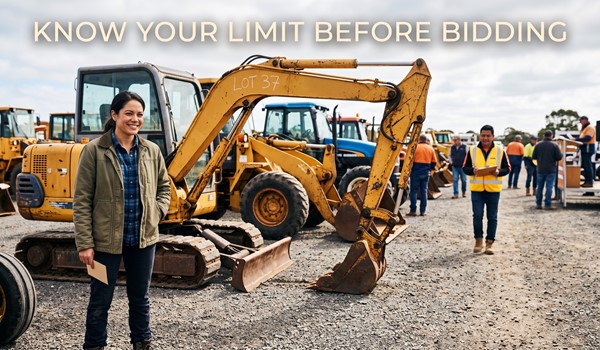
Auctions are one of the best places to buy plant, trucks, and machinery below dealer pricing. They are also the least forgiving. When the hammer falls the purchase is binding, payment terms start immediately, and there is usually one of each unit.
Buying equipment at auction? Arrange finance before auction day
- The hammer starts the clock: Auction payment terms activate the moment you win, and settlement is often measured in days rather than weeks.
- Pre-approval sets your ceiling: A pre-approved facility tells you exactly what you can bid to, so you compete with certainty instead of hoping finance lands.
- No cooling-off: Auction purchases are binding. If finance falls through you can forfeit your deposit and lose the asset.
- Used assets need checks: Lenders run PPSR searches and may want a valuation, which takes time you will not have after the sale.
- The decision: Arrange finance before you register to bid, not after the hammer falls.
Auctions are one of the best places to buy plant, trucks, and machinery below dealer pricing. They are also the least forgiving. When the hammer falls the purchase is binding, payment terms start immediately, and there is usually one of each unit. Bidding without finance in place is the most common way buyers lose good machines. This guide covers why pre-approval matters at auction and how to have it ready. It is general information, not financial advice.
Why auctions are different
Buying from a dealer or private seller usually allows time to inspect the machine, arrange funding, and settle at a workable pace. An auction compresses all of that. Payment terms activate at the fall of the hammer, and auction houses commonly require settlement within days. Miss the deadline and you can forfeit your deposit, lose the asset, and remain liable under the terms you agreed at registration.
There is no cooling-off period and no finance clause to fall back on. A winning bid is a contract. That is a very different risk profile from a private purchase where you can walk away if the funding does not come together, and it is why lenders and brokers treat auction buyers as a distinct category with distinct preparation.
What pre-approval actually gives you
Pre-approval is an agreement from a lender on how much it will fund before you have chosen the exact machine. It is based on your business financials and credit profile, and it changes how you bid:
- A hard ceiling: You know your maximum before the bidding starts, which stops the auction-room momentum that pushes buyers past what they can fund.
- Speed to settle: With the assessment already done, funding can be arranged inside the auction house's payment window rather than racing it.
- Bid like a cash buyer: Certainty of funds lets you commit decisively rather than hedging on whether finance will come through.
- Room to check the asset: Time spent before the auction on inspections and lender requirements is time you simply do not have afterwards.
| Consideration | Bidding without finance | Bidding with pre-approval |
|---|---|---|
| Your bidding limit | An estimate | A confirmed funding ceiling |
| After the hammer | Start the application | Settlement already in motion |
| If finance is declined | Deposit and asset at risk | Assessment already completed |
| PPSR and valuation | Rushed into the settlement window | Handled before you bid |
What lenders check on auction assets
Auction stock is usually used, so the asset gets more scrutiny than a new machine on a dealer invoice. Expect lenders to look at these:
- Age at end of term: Most lenders cap how old an asset can be when the loan finishes, so an older machine may mean a shorter term or a larger deposit.
- Clear title: A PPSR search confirms no other financier holds an interest. Auction houses generally warrant clear title, but lenders complete their own checks regardless.
- Valuation and condition: Hours, service history, and resale profile all feed the assessment, particularly on higher-value plant.
- Identification: The serial number or VIN is needed to register the lender's security interest, so record it from the lot listing.
One point catches buyers out. Pre-approval is generally granted against a type of asset and a maximum price, not a blank cheque. If you win something materially different from what was discussed, the lender may need to reassess. Talk to your broker about the categories you intend to bid on so the approval covers what you actually chase on the day.
Getting ready before the day
A broker is particularly valuable here, because the panel matters more when the timeline is tight. EasyAsset compares more than 50 bank and non-bank lenders in one application, including specialist asset financiers comfortable with used and auction purchases where mainstream banks often are not. The quote and comparison stage carries no impact to your credit score, so getting organised early costs you nothing.
Have your ABN, time trading, GST registration status, and recent bank statements ready, along with lot details for the machines you are targeting. Your broker can then size a facility to your bidding range and handle settlement paperwork while you concentrate on the auction.
A realistic scenario
Picture an earthmoving contractor in regional Victoria targeting a used excavator at a major clearing auction, expecting to bid around $120,000. Without finance arranged, he would be bidding on an estimate and starting a lender application only after winning, against a settlement deadline of a few days.
Instead he speaks to a broker a fortnight out. A lender comfortable with used earthmoving plant pre-approves a facility to $130,000 as a chattel mortgage with a balloon matched to the machine's resale curve. On auction day he bids to a known ceiling, wins at $118,000, and the broker clears the PPSR check and settlement inside the payment window. The preparation, not the bidding, is what secured it.
What matters most
Auctions reward preparation and punish improvisation. The hammer creates a binding contract with a settlement deadline measured in days, no cooling-off, and no finance clause. Arrange pre-approval before you register to bid, know your ceiling, and have the PPSR and valuation questions dealt with in advance. Do that and you bid with the certainty of a cash buyer. Turn up hoping the finance follows and you risk your deposit and the machine. This is general information only and not financial advice, so speak with your accountant about your circumstances.
Bidding at an upcoming auction? Arrange pre-approval through EasyAsset here.
Frequently asked questions
Can I get equipment finance after winning at auction?
Sometimes, but it is a risk. Auction payment terms activate immediately and settlement is often measured in days, so an application started after the hammer falls is racing the deadline. If it does not land in time you can forfeit your deposit and lose the asset, which is why pre-approval is the safer route.
Does pre-approval commit me to buying?
No. Pre-approval sets out how much a lender will fund based on your profile. If you do not win, or choose not to bid, you are not obliged to draw on it. It gives you a confirmed ceiling to bid within rather than a commitment to buy.
Will bidding on a different machine void my pre-approval?
Pre-approval is usually granted against an asset type and a maximum price. Winning something materially different can trigger a reassessment, so tell your broker which categories and price range you intend to bid on, and the approval can be set up to cover them.